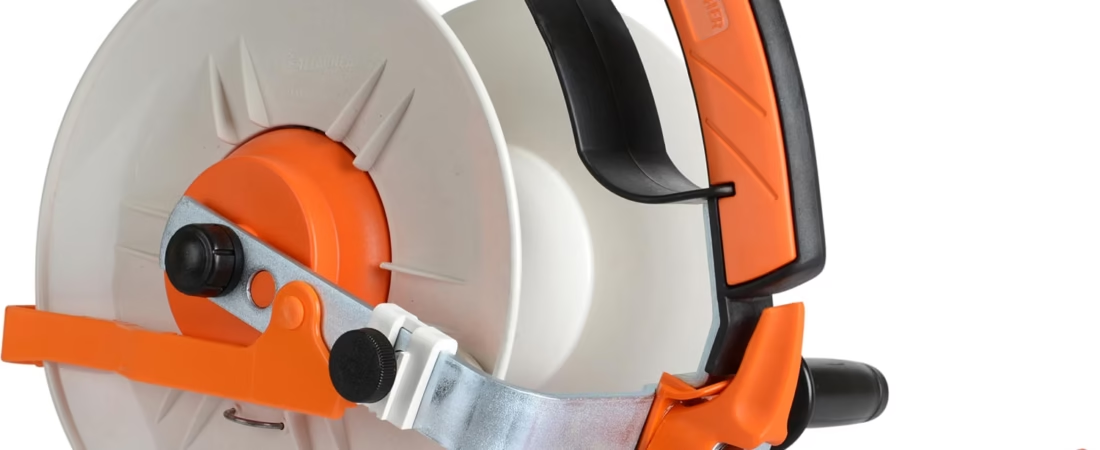
Managing a temporary electric fence is often less about the energizer itself and more about how efficiently the fencing material can be deployed, collected, transported, and stored. Polywire, polyrope, and electric fence tape are useful for creating temporary or movable boundaries, but handling long lengths by hand can quickly become inconvenient. A properly designed fence reel can make that process more organized by keeping the fencing material wound around a spool and making it easier to move between locations.
The Gallagher Electric Fence Reel is designed for this type of task. It uses a geared winding mechanism intended to help users collect fencing material efficiently, while its construction is aimed at repeated handling in agricultural and outdoor environments. The model is designed around a 3:1 gear ratio, a feature that can make winding long lengths of fencing material more manageable than manually gathering loose wire, rope, or tape.
This type of equipment is particularly relevant to rotational grazing, temporary paddocks, livestock management, pasture subdivision, and other applications where an electric fence needs to be moved regularly. Rather than leaving fencing material tangled on the ground or coiled loosely, a reel provides a structured way to collect it and prepare it for the next installation.
Understanding what a fence reel does—and what it does not do—is useful before incorporating one into a fencing system. A reel is primarily a tool for managing fencing material. It does not replace an electric fence energizer, proper posts, insulators, grounding equipment, or appropriate livestock-fencing practices.
This guide explores the Gallagher reel’s design, the meaning of its gearing system, compatible fencing materials, practical applications, maintenance considerations, and factors to evaluate when choosing a reel for temporary electric fencing.
Understanding the Role of an Electric Fence Reel
An electric fence reel is essentially a mechanical winding system for portable fencing material.
When a temporary fence is installed, a length of polywire, polyrope, or fence tape is stretched between posts or other suitable supports. When the fence needs to be relocated, the material has to be collected again.
Without a reel, this often involves pulling the fencing material toward one point and manually winding it into a coil. Long lengths can become twisted, tangled, or difficult to store neatly.
A reel changes that process by providing a spool around which the material can be wound.
The basic workflow is straightforward:
- The temporary fence is taken down.
- The fencing material is brought toward the reel.
- The material is attached or positioned for winding.
- The reel handle is turned.
- The material winds around the spool.
- The reel is secured and transported or stored.
The gearing system can make the winding process more efficient, particularly when dealing with substantial lengths of fencing material.
This is why a fence reel can be an important accessory for people who frequently install and remove temporary electric fencing.
Key Features of the Gallagher Electric Fence Reel
3:1 Geared Winding System
One of the defining characteristics of this Gallagher reel is its 3:1 gear ratio.
A geared reel uses mechanical advantage to make the winding mechanism easier to operate. With a 3:1 arrangement, the reel’s internal gearing changes the relationship between handle movement and spool movement.
The practical benefit is that the user does not have to rely entirely on a direct-drive winding mechanism.
Gear systems can be especially useful when collecting long runs of fencing material. As more material accumulates on the spool, the winding process can involve changing resistance and increasing spool diameter. Mechanical gearing can help make the process more controlled.
The exact effort required will still depend on the fencing material, its length, tension, condition, and whether the material is caught on vegetation or other obstacles.
Designed for Polywire
Polywire combines conductive strands with synthetic fibers, creating a lightweight fencing material commonly used for temporary electric fencing.
A compatible reel allows polywire to be collected without requiring it to be manually rolled into a loose bundle.
This can help reduce tangling during transportation and make the material easier to deploy again later.
When winding polywire, maintaining a relatively even tension is useful. Allowing the material to become excessively loose or crossed during winding can create problems during the next deployment.
Compatible With Polyrope
Polyrope is another type of temporary electric fencing conductor.
Compared with thinner polywire, polyrope can have a different physical feel and may occupy more space on the reel. A reel designed to handle polyrope can make collection more convenient after a temporary fence has been removed.
Users should always verify the reel’s specific compatibility and capacity with the particular fencing product being used.
Fence Tape Applications
Electric fence tape is wider than conventional polywire and can provide greater visibility in appropriate fencing applications.
A reel can be particularly useful for handling tape because manually gathering wide tape can result in folds and twists.
When collecting fence tape, keeping the material aligned during winding can help produce a cleaner roll and make subsequent deployment easier.
The usable capacity of any reel will depend on the dimensions and construction of the fencing material. Wider tape generally occupies more space than narrow wire.
Heavy-Duty Gearbox
The reel incorporates a heavy-duty gearbox designed for the mechanical demands associated with repeated winding.
A gearbox is particularly important on a fence reel because the mechanism may be operated many times during a grazing season or other period of frequent fence movement.
The gearbox also separates the handle movement from the spool movement, providing mechanical leverage during winding.
As with any mechanical equipment, the longevity of the gearbox depends on how the reel is used, stored, and maintained.
Shatter-Resistant Lock
The reel includes a shatter-resistant locking feature intended to help secure the spool or winding mechanism when necessary.
A locking system can be useful during transportation and storage because fencing material needs to remain under control rather than freely unwinding.
A secure reel can also make handling more convenient when moving equipment from one section of a property to another.
Users should make sure the lock is properly engaged according to the manufacturer’s instructions rather than forcing the mechanism.
How It Can Be Used
Rotational Grazing
Rotational grazing involves moving livestock between different pasture areas according to a planned schedule.
Temporary electric fencing can be used to divide larger areas into smaller grazing sections. When the livestock move, the fence can also be relocated.
This is where a fence reel can become particularly practical.
Instead of manually coiling a long length of polywire after every move, the material can be collected onto the reel. The same fencing material can then be transported and deployed at another location.
The reel does not determine the grazing plan itself. It simply provides a practical method for managing the physical fencing material used within that system.
Temporary Paddocks
Farmers and livestock managers may need to create temporary paddocks for different animals or different periods of grazing.
Portable electric fencing allows boundaries to be changed without permanently installing every fence line.
A reel supports this flexible approach by making removal and storage more organized.
Pasture Subdivision
Large pasture areas can sometimes be divided into smaller sections using temporary fencing.
A reel can make the repeated installation and removal of the fencing material less cumbersome, especially when the same line needs to be moved regularly.
Livestock Management
Temporary electric fencing may be used with appropriate livestock-management systems to create controlled areas for animals.
The suitability of the fence configuration depends on the species, animal behavior, terrain, fence design, energizer performance, and other factors.
The reel itself should be viewed as a handling accessory rather than the component that provides the electrical containment function.
Seasonal Fencing
Some fencing installations are only required during certain seasons.
For example, temporary boundaries may be installed during a grazing period and removed afterward.
A reel can make off-season storage easier by keeping the fencing material organized rather than leaving long lengths loosely coiled.
Agricultural Training and Demonstration Areas
Portable fencing is also useful for agricultural demonstrations, training areas, and temporary livestock-management layouts.
When the configuration needs to change frequently, organized winding and storage can save time during setup and removal.
Who It May Be Suitable For
Farmers
Farmers managing livestock and temporary pasture divisions may have regular reasons to install and remove electric fencing.
For these users, a dedicated reel can become part of the routine fencing toolkit.
Livestock Managers
People responsible for managing livestock across multiple grazing areas may benefit from having an organized method for collecting temporary fencing.
The reel can simplify equipment transport between locations.
Smallholding and Homestead Owners
Small-scale livestock operations may also use temporary electric fencing for pasture management.
A reel can help keep fencing materials manageable when fence lines need to change periodically.
Agricultural Contractors
Professionals who install or relocate temporary fencing across multiple properties may have a greater need for durable winding equipment.
Repeated use makes the mechanical design and construction of a reel particularly relevant.
Users Managing Temporary Fencing
Anyone who regularly removes and redeploys polywire, polyrope, or electric fence tape can potentially benefit from a dedicated winding tool.
The more frequently a temporary fence is moved, the more valuable organized handling can become.
Important Things to Consider
Reel Capacity
Not every reel can hold every length or type of fencing material.
A thin polywire may occupy significantly less space than a wide electric fence tape. Polyrope may also require more spool volume depending on its diameter.
Before using a reel for a particular fencing project, determine how much material needs to be stored and whether the reel’s capacity is appropriate.
Overfilling a reel can interfere with winding and may prevent the spool from operating correctly.
Type of Fencing Material
Polywire, polyrope, and fence tape are not physically identical.
They differ in width, diameter, flexibility, conductivity, and how they behave during winding.
A reel can be suitable for multiple categories while still requiring users to pay attention to the dimensions of their particular fencing product.
Fence Tension
When dismantling an electric fence, tension should be released appropriately before attempting to wind the material.
Trying to use a reel to pull against a fence that remains under excessive tension can place unnecessary mechanical stress on the equipment and may create a safety risk.
The fence should be handled according to appropriate electrical and livestock-fencing procedures.
Electrical Safety
An electric fence should never be treated like ordinary string or rope.
Before handling the conductor directly, make sure the electric fence energizer is switched off and the system is safely isolated according to the manufacturer’s instructions.
Do not assume that a fence is safe to touch simply because the energizer is not immediately visible.
A proper fence-management procedure should account for the energizer, grounding system, gates, vegetation, and other connected components.
Terrain and Vegetation
The environment where the fence is installed can affect removal.
Vegetation may wrap around the wire or tape. Stakes can become difficult to pull. Uneven terrain can also increase resistance during collection.
A reel cannot eliminate these physical obstacles.
Removing vegetation and releasing the fence methodically can make the winding process smoother and reduce unnecessary strain on the equipment.
Storage Conditions
Agricultural equipment is frequently exposed to dirt, moisture, dust, mud, and changing temperatures.
When possible, store the reel in a dry location away from unnecessary exposure to the elements.
Keeping the mechanism reasonably clean can help preserve its moving parts.
Mechanical Inspection
Before repeated use, inspect the handle, spool, gearbox, locking mechanism, and frame for signs of damage or abnormal movement.
If a component appears damaged, repair or replace it according to the manufacturer’s guidance before returning the reel to service.
Mechanical problems are easier to address before the reel is loaded with a long length of fencing material.
A Practical Fence-Reel Workflow
Using a consistent process can make temporary fencing easier to manage.
Step 1: De-Energize the Fence
Turn off and safely isolate the electric fence system before beginning removal.
Follow the safety instructions associated with the energizer and fence installation.
Step 2: Remove the Fence From Supports
Release the polywire, polyrope, or tape from the appropriate insulators and supports.
Avoid pulling aggressively if the conductor is caught in vegetation or other obstacles.
Step 3: Check the Material
As the fencing material comes down, inspect it for damage, excessive wear, knots, or other issues.
This is a convenient time to identify sections that may need attention before the next installation.
Step 4: Attach the Material to the Reel
Secure the fencing material to the reel according to the manufacturer’s recommended method.
The starting point should be stable enough to prevent the material from slipping during winding.
Step 5: Wind at a Controlled Rate
Operate the handle steadily rather than attempting to turn the mechanism excessively quickly.
Keep an eye on how the material is accumulating on the spool.
Step 6: Maintain Alignment
Try to keep the fencing material arranged evenly as it winds.
Crossed or twisted material can create problems when the fence is deployed again.
Step 7: Secure the Reel
Once the material is collected, use the appropriate locking mechanism or securing method.
This reduces the possibility of accidental unwinding during transport or storage.
Why Organized Winding Matters
The biggest benefit of a dedicated reel is not necessarily the act of turning a handle. It is the organization that comes afterward.
A loose coil of fencing material can easily become tangled. When the fence is needed again, someone may have to spend time separating sections before installation can begin.
A properly wound spool creates a more predictable starting point.
It also makes it easier to estimate how much material remains available and can simplify transportation between grazing areas.
For farms where temporary fencing is moved frequently, this organization can become an important part of the overall workflow.
Comparing General Fence Reel Categories
Manual Direct-Drive Reels
A direct-drive reel connects the handle more directly to the spool.
These systems can be relatively simple and may be suitable for users who handle shorter lengths of lightweight fencing material.
The main consideration is the amount of physical effort required during winding.
Geared Fence Reels
A geared reel introduces mechanical advantage between the handle and spool.
The Gallagher model’s 3:1 gearing is an example of this approach.
Geared systems can be useful when dealing with longer fencing runs or when reducing the effort associated with winding is a priority.
The additional mechanical components also mean there are more parts to inspect and maintain compared with very simple designs.
Heavy-Duty Agricultural Reels
Heavy-duty reels are generally intended for repeated agricultural use and may emphasize stronger frames, larger components, or more durable mechanical systems.
They can make sense when a reel is used frequently across larger properties.
The appropriate size should still correspond to the type and amount of fencing material being handled.
Compact Portable Reels
Compact reels prioritize portability and ease of transportation.
They may be useful for smaller temporary fences, occasional use, or situations where minimizing equipment size is important.
Their capacity may be lower than that of larger agricultural reels.
Maintenance Tips
Regular maintenance does not need to be complicated.
Start by keeping dirt and debris from accumulating around moving components.
Inspect the gearbox and handle for unusual noise, resistance, or movement.
Check the spool for damage and make sure it rotates properly.
Inspect the locking mechanism before transporting the reel.
If lubrication is recommended by the manufacturer, use the specified lubricant and follow the maintenance instructions rather than applying products indiscriminately.
After particularly muddy or wet use, allow the equipment to dry appropriately before long-term storage.
Avoid modifying the reel or replacing mechanical components with unsuitable parts.
Frequently Asked Questions
What is an electric fence reel used for?
An electric fence reel is used to wind, store, transport, and redeploy portable electric fencing materials such as polywire, polyrope, and fence tape.
What does a 3:1 gear ratio mean?
A 3:1 gear ratio describes the relationship between the handle movement and spool movement within the reel’s gearing system. It provides mechanical advantage during winding, making the mechanism different from a simple direct-drive reel.
Can this type of reel be used with polywire?
The Gallagher reel is designed for portable fencing materials including polywire. Users should still confirm that the dimensions and capacity of their particular fencing material are appropriate.
Can it handle polyrope?
The design is intended for polyrope as well as other temporary electric fencing materials. The amount of rope that can be wound depends on its dimensions and the reel’s available capacity.
Can electric fence tape be wound onto a reel?
Yes, reels designed for appropriate electric fence tape can make collection easier. Wide tape should be wound carefully so that it remains aligned and does not fold or twist unnecessarily.
Does the reel provide electricity to the fence?
No. A fence reel is a mechanical handling device. It does not replace an electric fence energizer or other components required to operate an electric fence system.
Should the fence be energized while winding it?
No. The electric fence system should be safely switched off and isolated before handling the conductor. Follow the relevant energizer and fencing safety instructions.
Is a geared reel useful for long fence lines?
A geared system can provide mechanical advantage during winding, which can be useful when collecting longer runs of fencing material. The practical workload still depends on material type, length, terrain, and how easily the fence can be released.
How should fencing material be stored on the reel?
The material should be wound evenly and without unnecessary crossings or twists. Avoid exceeding the reel’s intended capacity, and secure the spool for transportation or storage.
Can the reel be left outside?
Outdoor equipment may encounter changing weather conditions, but long-term exposure can contribute to wear. When practical, storing the reel in a dry, protected location can help preserve its mechanical components.
How often should the reel be maintained?
Maintenance frequency depends on how often the reel is used and the conditions in which it operates. Regular inspection before use is a sensible practice, particularly when the reel has been exposed to mud, moisture, dust, or heavy agricultural use.
What should I check before using the reel?
Inspect the frame, handle, spool, gearbox, and locking mechanism. Make sure the reel operates normally and that the fencing material is suitable for its capacity.
Final Thoughts
Managing temporary electric fencing becomes easier when the fencing material can be collected and stored in an organized way. The Gallagher Electric Fence Reel is designed specifically around that requirement, combining a 3:1 geared winding mechanism with a construction intended for repeated handling of portable fencing materials.
Its usefulness is particularly connected to the workflow surrounding temporary fencing. Polywire, polyrope, and fence tape can all become difficult to handle when removed from long fence lines, especially when they are moved frequently. A dedicated reel provides a structured method for gathering those materials and preparing them for another installation.
The 3:1 gearing is an important part of the design because it provides mechanical advantage during winding. The heavy-duty gearbox and shatter-resistant locking feature also address practical concerns associated with repeated agricultural handling.
At the same time, a reel is only one part of a complete electric fencing system. Proper energizer operation, grounding, posts, insulators, fencing material, livestock considerations, and electrical safety remain important. The reel should therefore be viewed as a management and storage tool rather than a substitute for those components.
For farmers, livestock managers, smallholding owners, and others who regularly install and remove temporary electric fencing, understanding reel capacity, fencing-material compatibility, winding technique, maintenance, and safe handling can help create a more organized workflow.
The most suitable setup will depend on the length and type of fencing being used, how frequently it is moved, the environment in which it operates, and the storage requirements of the user.