Emergency preparedness often focuses on large pieces of equipment such as tents, sleeping bags, first-aid kits, flashlights, and portable power sources. Yet some of the most useful emergency supplies can be much smaller. An emergency blanket is a good example. It can be folded into a compact package, stored in a vehicle or backpack, and used when protection from cold, wind, rain, or exposure becomes important.
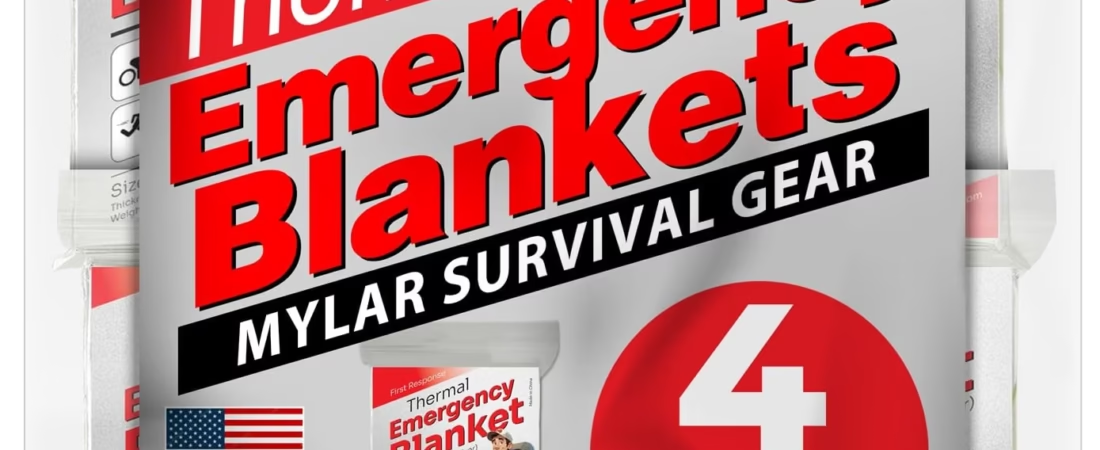
The Emergency Blanket Mylar Thermal Space Survival Gear & Supplies 4-Pack Foil is designed as a lightweight emergency blanket option based on reflective material. These blankets are commonly associated with outdoor preparedness because their primary purpose is not to generate heat but to help reduce heat loss by reflecting a portion of radiant body heat back toward the person using the blanket.
A four-pack also makes it possible to distribute blankets among different locations or members of a group. One can be stored in a hiking backpack, another in a vehicle, and additional blankets can be kept in a household emergency kit.
Understanding how a Mylar emergency blanket works is important because it is easy to misunderstand its purpose. A reflective emergency blanket is not equivalent to an insulated winter sleeping bag, a heated blanket, or a waterproof shelter. Its usefulness comes from its combination of compact storage, low weight, reflective properties, and versatility.
This guide explains the role of Mylar emergency blankets, how they can be used, what their reflective surface does, where they may be useful, and what limitations should be considered when incorporating them into an emergency preparedness plan.
What Is a Mylar Emergency Blanket?
A Mylar emergency blanket is a thin, flexible sheet made from a reflective material designed to help reduce heat loss.
The reflective surface is commonly associated with the material’s ability to reflect radiant heat. When used correctly, the blanket can help reduce some of the heat that would otherwise radiate away from the body.
Unlike a conventional blanket made from wool, fleece, or synthetic insulation, a Mylar emergency blanket is extremely thin. It does not provide warmth primarily through a thick insulating layer.
That distinction matters.
A traditional insulated blanket can trap air and create a physical barrier between the body and the surrounding environment. A reflective emergency blanket works differently. Its value comes largely from its reflective properties and ability to provide a barrier against some environmental exposure.
Because it is thin, it can be folded into a very small package. This makes it practical for emergency kits where space and weight are important considerations.
Key Features
Reflective Mylar Material
The defining feature of this type of emergency blanket is its reflective foil-like surface.
The material is designed to reflect radiant heat rather than simply absorb it. When wrapped around a person with appropriate spacing and positioning, some body heat that would otherwise radiate outward can be reflected back toward the body.
This is one reason emergency blankets are sometimes described as thermal or space blankets.
The reflective surface can also make the blanket highly visible in some outdoor environments, which may be useful during emergency signaling depending on lighting and surroundings.
Four-Pack Format
The four-pack configuration provides multiple blankets rather than a single emergency sheet.
This can be useful for households, families, groups of hikers, or vehicle preparedness.
Instead of relying on one blanket for multiple people, each person can potentially have access to a separate emergency layer.
The additional blankets can also be distributed across different preparedness locations.
For example:
- One can remain in a hiking backpack.
- One can be stored in a vehicle.
- One can be kept with household emergency supplies.
- One can be placed in a travel or camping bag.
The exact packaging and dimensions should always be confirmed against the current product listing.
Lightweight Construction
One of the most practical characteristics of a Mylar emergency blanket is its low weight.
Traditional blankets can occupy considerable space in a backpack. A thin reflective blanket can be folded much more compactly.
This makes it easier to include emergency thermal protection without significantly increasing the weight of an outdoor kit.
For hikers and backpackers, where every additional item contributes to the total load, this can be especially relevant.
Compact Storage
A folded emergency blanket takes up very little room compared with most conventional blankets.
It can therefore fit into small emergency compartments, glove boxes, backpacks, camping containers, and first-aid storage areas.
Compactness also encourages redundancy. Carrying multiple lightweight emergency blankets can be more practical than carrying multiple full-size insulated blankets.
Multipurpose Emergency Use
Although thermal protection is the primary reason to carry an emergency blanket, reflective sheets can have several other practical applications.
Depending on the situation, an emergency blanket may be used as:
- A temporary wind barrier
- A ground layer
- A moisture barrier
- An emergency shelter component
- A visibility or signaling aid
- A cover for emergency supplies
- A temporary shade surface
- A protective layer beneath equipment
The suitability of each use depends on the material, weather conditions, and circumstances.
How an Emergency Blanket Helps Reduce Heat Loss
Understanding heat transfer can make emergency blanket use more effective.
The human body continuously produces heat. In cold conditions, the body can lose heat through several mechanisms, including radiation, convection, conduction, and evaporation.
A reflective blanket primarily addresses radiant heat loss.
Radiant Heat Loss
Radiation occurs when the body emits infrared energy toward surrounding surfaces.
A reflective material can redirect a portion of this radiant energy toward the body.
This is different from simply wrapping someone in a thick insulating blanket.
Convection
Convection involves heat being carried away by moving air.
A reflective blanket can provide some protection against moving air when it is positioned appropriately, but it is not a substitute for a properly insulated and wind-resistant shelter.
Wind can dramatically increase heat loss, particularly when clothing becomes wet.
Conduction
Conduction occurs when heat transfers directly from the body to a colder surface.
This is particularly important when someone is sitting or lying directly on cold ground.
A reflective blanket can sometimes serve as an additional ground layer, but it should not be considered equivalent to a dedicated insulated sleeping pad.
Using insulation underneath the body is important because compression reduces the effectiveness of many insulating materials.
Evaporative Heat Loss
Wet clothing and moisture can contribute significantly to heat loss.
An emergency blanket can provide a moisture-resistant outer layer in some circumstances, but it does not replace dry clothing.
If someone is wet and cold, getting out of wet clothing and into dry insulation should be prioritized whenever practical.
How It Can Be Used
Hiking Emergencies
A hiker can carry an emergency blanket as a backup layer in case weather changes unexpectedly or the person becomes delayed.
Unexpected injuries, navigation problems, fatigue, or changing weather can turn a routine hike into a longer stay outdoors.
A compact emergency blanket adds another layer of preparedness without requiring significant backpack space.
Camping
Campers can keep emergency blankets as supplementary equipment alongside sleeping bags, tents, and insulated clothing.
The emergency blanket can provide an additional reflective layer when conditions become colder than expected.
It should not replace a sleeping bag appropriate for the forecasted temperature.
Vehicle Emergency Kits
A vehicle is an excellent place to keep emergency blankets because they take up very little space.
A vehicle emergency kit may need to address situations such as mechanical breakdowns, severe weather, traffic delays, or unexpected overnight stops.
An emergency blanket can provide a basic thermal layer while waiting for assistance.
For winter driving, it should be combined with other appropriate equipment rather than treated as the sole source of protection.
Household Emergency Preparedness
During power outages or severe weather events, indoor temperatures can fall depending on the season and building.
Emergency blankets can be stored as supplementary thermal equipment.
They may also be useful if a person needs to temporarily move into a less heated area of the home.
However, household preparedness should also include appropriate clothing, blankets, food, water, lighting, communication equipment, and other supplies.
Outdoor Events
Long outdoor events can involve unexpected temperature changes.
Keeping an emergency blanket in a small bag can provide an additional contingency layer without requiring the person to carry a bulky blanket.
Travel
Travelers can place an emergency blanket inside a luggage compartment or day bag.
Because it is lightweight and compact, it can remain available without taking up much room.
This can be useful when traveling through areas where weather conditions may change quickly.
Emergency Shelter
A reflective blanket can potentially form part of an improvised emergency shelter.
For example, it can be positioned to create a reflective barrier behind or around a person while another material provides structural support.
A proper shelter should protect against wind and precipitation as well as cold.
The emergency blanket works best as one component rather than as the entire shelter system.
Using an Emergency Blanket Correctly
Simply wrapping a blanket around the body is not always enough.
Positioning matters.
If the goal is thermal protection, the reflective side should generally be oriented according to the product’s instructions and the intended thermal application.
Avoid wrapping the material so tightly that it interferes with comfortable movement or breathing.
The blanket should be used together with appropriate clothing and shelter whenever possible.
In cold conditions, protecting the head, hands, feet, and exposed skin is also important. An emergency blanket cannot compensate for prolonged exposure to severe cold.
If a person is showing signs of hypothermia, including confusion, unusual drowsiness, impaired coordination, or worsening shivering, the situation should be treated as a medical emergency. Move the person to appropriate shelter, seek professional assistance, and follow established first-aid guidance.
Using an Emergency Blanket as a Ground Layer
Cold ground can draw heat away from the body.
An emergency blanket can sometimes be placed beneath a person as one layer of a ground setup.
However, reflective material works differently when pressed directly against the ground or another surface.
For effective thermal protection, an air gap can matter for radiant heat reflection. A thin foil-like blanket lying directly against a cold surface should not be expected to perform like a thick insulated sleeping pad.
For camping, a dedicated sleeping pad remains the appropriate solution for ground insulation.
The emergency blanket can serve as an additional layer rather than the primary insulation system.
Using It as a Wind Barrier
Wind can accelerate heat loss by moving cold air across exposed surfaces.
A reflective blanket can be positioned as part of a temporary windbreak or shelter.
It is important to secure the material properly because thin emergency blankets can be affected by strong wind.
Do not position the blanket near flames, heaters, stoves, or other high-temperature sources.
The material can melt or burn if exposed to sufficient heat.
Using It for Visibility and Signaling
The reflective surface may also have signaling applications.
In an emergency, a highly reflective object can sometimes attract attention when sunlight is available.
The blanket can be positioned so that it is visible from a distance, depending on the surrounding terrain.
Signaling effectiveness depends on weather, visibility, terrain, lighting, and the location of rescuers.
It should therefore be treated as an additional signaling method rather than a guarantee that someone will notice the blanket.
Who It May Be Suitable For
Hikers
Hikers can benefit from carrying compact emergency equipment that does not add much weight.
An emergency blanket can serve as a contingency item for unexpected delays or exposure.
Campers
Campers can use the blankets as supplementary thermal and shelter equipment.
They can be kept in a camping container or personal backpack as backup supplies.
Vehicle Owners
Drivers can store several emergency blankets in a roadside emergency kit.
The four-pack format makes it possible to keep more than one blanket available for passengers.
Families
A household emergency kit can benefit from multiple blankets because emergencies can affect several people at once.
Four individual blankets can also be distributed among different emergency bags.
Outdoor Workers
People who spend long periods outside may find compact emergency thermal equipment useful as a contingency supply.
This can be especially relevant when work takes place in areas where weather conditions can change unexpectedly.
Travelers and Backpackers
The small folded size can make emergency blankets useful for travelers who want basic thermal preparedness without carrying a bulky blanket.
Important Things to Consider
It Is Not a Substitute for Insulation
The most common misunderstanding about emergency blankets is expecting them to provide the same warmth as thick insulated blankets.
They do not.
A Mylar blanket is thin and lightweight. Its primary thermal principle involves reflecting radiant heat rather than providing substantial lofted insulation.
For cold-weather camping, use equipment designed for the actual conditions, including an appropriate sleeping bag, sleeping pad, clothing system, and shelter.
It Does Not Generate Heat
An emergency blanket does not create warmth.
It can help reduce certain forms of heat loss, but the person still needs to generate body heat.
If someone is severely cold, an emergency blanket alone may be insufficient.
Wind and Rain Require Additional Protection
The blanket can provide some barrier against environmental exposure, but strong wind or heavy rain can overwhelm a simple sheet of reflective material.
A proper shelter is preferable when conditions become severe.
Avoid Open Flames
Emergency blankets should be kept away from flames, stoves, heaters, sparks, and other high-temperature sources.
The thin material is not designed to function as a fire-resistant blanket.
This is particularly important around camping stoves.
The Material Can Tear
A thin emergency blanket is intentionally lightweight, but that also means it can be less resistant to rough handling than a conventional fabric blanket.
Sharp rocks, branches, tools, and excessive pulling can damage the material.
Handle it carefully and avoid relying on it as a load-bearing component.
Wind Can Make Handling Difficult
The lightweight construction that makes an emergency blanket easy to carry can also make it difficult to control in windy conditions.
When using it outdoors, secure it carefully without creating unnecessary tension that could cause tearing.
Repeated Folding May Affect Condition
Emergency blankets can develop creases and small tears after repeated use.
Inspect a previously used blanket before storing it again.
If it has significant damage, replace it rather than relying on it during an emergency.
Emergency Blankets Are Not Sleeping Bags
A sleeping bag surrounds the user with an insulating structure designed for sleeping in particular temperature ranges.
An emergency blanket does not provide the same level of insulation, comfort, or protection.
For planned overnight outdoor trips, use a sleeping bag appropriate for the expected conditions.
Emergency Blanket vs. Traditional Blanket
A traditional blanket and a Mylar emergency blanket serve different roles.
A traditional fleece, wool, or synthetic blanket provides physical insulation by trapping air.
A Mylar blanket is extremely thin and focuses primarily on reflective heat management.
The traditional blanket is generally more comfortable and suitable for routine warmth.
The emergency blanket is easier to carry as a backup and takes up much less space.
For emergency preparedness, there is no need to view the two categories as competitors. They can complement one another.
A household emergency kit can contain conventional blankets for comfort and insulation while keeping compact emergency blankets as additional supplies.
Emergency Blanket vs. Sleeping Bag
A sleeping bag is designed for extended use and provides insulation around the body.
An emergency blanket is designed more as a lightweight contingency item.
For planned camping, a sleeping bag matched to the weather conditions is generally the primary sleeping insulation.
The emergency blanket can be carried as an additional layer of preparedness.
Emergency Blanket vs. Emergency Bivvy
An emergency bivvy is essentially a more enclosed emergency shelter or sleeping system using reflective material.
It can provide more coverage around the body than a flat blanket.
A flat emergency blanket, however, can be more flexible because it can be used as a ground layer, shelter component, signaling surface, or temporary cover.
The choice depends on how the emergency equipment will be used.
Building an Emergency Kit Around the Blanket
An emergency blanket works best when combined with other equipment.
A basic outdoor emergency kit might include:
- Drinking water
- Appropriate food
- First-aid supplies
- Navigation equipment
- Flashlight or headlamp
- Spare batteries
- Communication device
- Power bank
- Emergency shelter
- Appropriate clothing
- Fire-starting equipment where safe and lawful
- Emergency blanket
The exact contents should depend on the activity and environment.
A day hike in a warm climate requires different equipment from a winter expedition.
Emergency Preparedness for Cold Conditions
Cold-weather preparedness should be approached as a system.
Start with dry clothing.
Layering allows the user to adjust insulation according to activity and temperature.
Protect the extremities with suitable gloves, socks, and head protection.
Use an insulated sleeping pad when sleeping outdoors because substantial heat can be lost to the ground.
Choose a sleeping bag appropriate for the expected conditions.
Use shelter to reduce wind exposure.
The emergency blanket can then provide an additional reflective barrier.
This layered approach is much more reliable than expecting one thin sheet to provide all necessary warmth.
Using Multiple Blankets
A four-pack allows multiple blankets to be deployed for different purposes.
For example, one could be used around a person, another as a temporary shelter component, and another kept unused as a backup.
In a family emergency, multiple people can also have individual blankets.
However, do not assume that combining several reflective blankets automatically produces the same effect as a professionally insulated shelter.
Proper layering and environmental protection still matter.
Storage and Maintenance
Emergency blankets require relatively little maintenance, but storage conditions still matter.
Keep unused blankets in their original packaging when practical.
Store them away from sharp objects that could puncture the material.
Avoid excessive heat that could damage packaging or the blanket itself.
Periodically inspect stored emergency supplies.
If a package has been opened, examine the blanket for tears, holes, or contamination before returning it to an emergency kit.
It can also be useful to mark the location of emergency blankets in a household or vehicle kit so that they can be found quickly.
Frequently Asked Questions
What is a Mylar emergency blanket used for?
A Mylar emergency blanket is primarily used to help reduce heat loss in emergency situations. Its reflective surface can redirect some radiant body heat back toward the person using it.
How does a thermal emergency blanket work?
It works primarily through reflection of radiant heat rather than thick insulation. The material can reflect a portion of infrared radiation emitted by the body, helping reduce certain forms of heat loss.
Is an emergency blanket actually warm?
An emergency blanket does not generate heat and is not equivalent to an insulated blanket. It can help reduce heat loss when used correctly, particularly when combined with appropriate clothing and shelter.
Can an emergency blanket replace a sleeping bag?
No. A sleeping bag provides substantially more insulation and is designed for sleeping outdoors under specified conditions. An emergency blanket is better considered a lightweight backup or supplementary item.
Can I use an emergency blanket in a vehicle?
Yes. Emergency blankets are compact and can be stored in vehicle preparedness kits. They may provide additional thermal protection during breakdowns, delays, or unexpected exposure.
Can it be used while camping?
Yes. It can serve as supplementary emergency equipment during camping. It should not replace a tent, sleeping bag, insulated sleeping pad, or weather-appropriate clothing.
Can an emergency blanket be used as a shelter?
It can potentially form part of a temporary emergency shelter. Additional support and protection against wind, rain, and other conditions may still be required.
Can an emergency blanket be used on the ground?
It can be placed beneath a person as one layer of a ground setup, but it should not be considered a replacement for an insulated sleeping pad. Ground insulation is an important part of cold-weather camping.
Can the reflective surface be used for signaling?
A reflective emergency blanket can potentially increase visibility or help attract attention under suitable lighting conditions. Its effectiveness depends on the environment and whether rescuers can see the reflective surface.
Are emergency blankets waterproof?
Many foil-style emergency blankets provide a barrier against moisture, but users should verify the specifications of the particular product. Even when the material resists water, the blanket should not automatically be treated as a complete waterproof shelter.
Can an emergency blanket be used near a campfire?
It should be kept away from open flames, sparks, camping stoves, heaters, and other high-temperature sources. Thin reflective materials are not designed to serve as fire-resistant blankets.
How many emergency blankets should I keep?
The appropriate number depends on how many people need emergency supplies and where the blankets will be stored. A four-pack can be distributed between household, vehicle, hiking, or camping kits.
Can emergency blankets be reused?
They can sometimes be reused if they remain intact and clean. Inspect the material carefully after use. Tears or significant damage can reduce its usefulness in an emergency.
Are emergency blankets suitable for children?
They can be included in a family emergency kit, but children should be supervised when using them. The thin material can present handling concerns if it is wrapped around a child improperly or used without adult supervision.
What should I carry with an emergency blanket?
An emergency blanket is most useful alongside other preparedness equipment such as appropriate clothing, water, food, first aid, lighting, communication equipment, navigation tools, and shelter.
Conclusion
An emergency blanket is a small piece of equipment that can provide an additional layer of preparedness without taking up much space.
The Emergency Blanket Mylar Thermal Space Survival Gear & Supplies 4-Pack Foil is designed around the reflective emergency blanket concept, giving users multiple lightweight sheets that can be stored in backpacks, vehicles, camping equipment, or household emergency kits.
Its primary function is to help reduce heat loss by reflecting some radiant body heat. That makes it different from traditional insulated blankets and sleeping bags, which provide warmth primarily through thicker insulating materials.
The compact format is one of the major practical advantages of this category. Four blankets can be distributed across different locations or kept together for situations involving multiple people.
They can also serve purposes beyond thermal protection. Depending on circumstances, an emergency blanket may contribute to a temporary shelter, provide a moisture-resistant layer, act as a wind barrier, serve as an emergency ground layer, or provide a reflective surface that may assist with signaling.
At the same time, it is important to understand the limitations. A Mylar emergency blanket does not generate heat, does not provide the same insulation as a sleeping bag, and should not be relied upon as the only protection in severe weather. Cold-weather preparedness should involve appropriate clothing, shelter, ground insulation, and other equipment suited to the environment.
Safe handling is equally important. Keep the material away from flames and high temperatures, inspect it for damage, and store it where it can be accessed quickly.
For hikers, campers, travelers, vehicle owners, outdoor workers, and households preparing for unexpected situations, a lightweight emergency blanket can be a practical addition to a broader preparedness system.
The most effective approach is to view it as one small but useful component of emergency planning rather than a complete solution on its own. Combined with appropriate shelter, clothing, food, water, first aid, communication, and navigation equipment, it can provide another layer of preparedness when circumstances do not go according to plan.