Emergency situations rarely happen at a convenient time. A vehicle can break down far from a service station, severe weather can interrupt normal routines, or a camping trip can become more complicated because of an unexpected change in conditions. Even relatively ordinary situations can become easier to manage when essential supplies are kept together and ready to use.
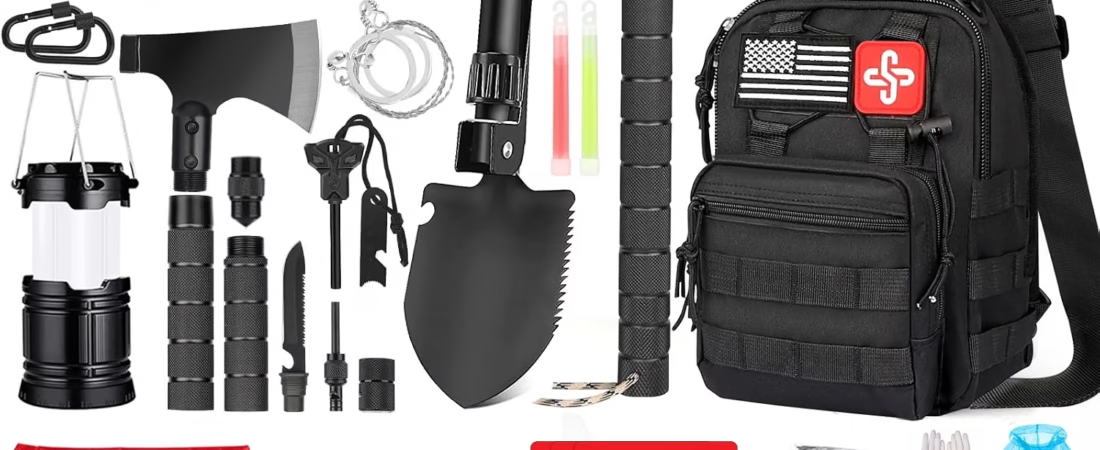
The 262-piece survival kit with first aid pouch, crossbody bag, emergency supplies, tent, camping axe hammer, and survival shovel with pick is designed around the concept of having a broad selection of emergency and outdoor equipment in one portable collection. Instead of assembling every item individually, a kit of this type brings together tools, first-aid supplies, shelter-related equipment, and other preparedness accessories.
The important thing to understand about a large survival kit is that the number of pieces is only one part of its usefulness. A kit can contain many individual components while still requiring users to understand what each item does, which supplies are appropriate for a particular situation, and what additional equipment may be necessary.
A survival kit should therefore be viewed as one part of a broader preparedness plan. It can support outdoor activities, emergency preparation, vehicle readiness, hiking, camping, and short-term contingency planning, but it does not eliminate the need for knowledge, planning, communication, food, water, and situation-specific equipment.
This guide looks at the major components and practical uses associated with this type of 262-piece survival kit, along with considerations for storage, first aid, outdoor tools, shelter, transportation, and emergency preparedness.
Understanding What a Multi-Piece Survival Kit Is
A survival kit is essentially a collection of equipment intended to help people respond to unexpected situations.
The contents can vary considerably from one kit to another. Some focus primarily on first aid, while others emphasize camping tools, navigation, shelter, fire-starting equipment, lighting, or general emergency supplies.
The 262-piece configuration discussed here takes a broader approach. It combines different categories of equipment in a portable format, including a first-aid kit pouch and a crossbody bag.
The advantage of a broad kit is convenience. Rather than having small emergency items scattered across drawers, backpacks, vehicles, and storage containers, many can be kept together.
The potential drawback is that no preassembled kit can anticipate every person’s environment.
Someone preparing for winter driving has different requirements from a backpacker. A family preparing for a household power outage needs different supplies from someone preparing for an overnight camping trip.
For that reason, a multi-purpose survival kit works best as a foundation that can be adapted to the user’s circumstances.
Key Features
262-Piece Configuration
The large number of individual pieces is intended to cover multiple preparedness categories rather than serving a single purpose.
The exact contents should always be checked against the current product listing and packaging because individual components in large kits can vary by configuration or production version.
A multi-piece approach may include combinations of:
- First-aid supplies
- Outdoor tools
- Emergency accessories
- Shelter equipment
- Fire-starting items
- Lighting equipment
- Basic utility tools
- Camping accessories
- Storage and carrying equipment
- General preparedness supplies
The value of this arrangement comes from having different categories available in one place.
At the same time, users should avoid assuming that every component is suitable for every emergency. Some tools require practice, some medical supplies have expiration dates, and some equipment is designed for specific outdoor conditions.
First Aid Kit Pouch
A dedicated first-aid pouch provides a place for medical supplies to be organized separately from larger tools.
This is useful because first-aid equipment may need to be accessed quickly. Keeping bandages and other basic supplies in a clearly identifiable pouch can make them easier to locate than if they were mixed together with tools.
A first-aid kit should be inspected periodically.
Check expiration dates where applicable and replace items that have been used, damaged, contaminated, or degraded. Sterile dressings and similar supplies should remain appropriately packaged until needed.
The presence of a first-aid pouch does not make the kit a substitute for professional medical care. Serious injuries, heavy bleeding, breathing difficulties, severe burns, suspected fractures, or other significant emergencies require appropriate emergency assistance.
Crossbody Carrying Bag
The crossbody bag provides a portable way to carry and organize the equipment.
A carrying system matters because a survival kit is useful only if it can be transported to where it is needed.
A crossbody configuration can make smaller emergency supplies easier to carry during outdoor activities or while moving between locations.
However, the total weight of a large kit can become significant. Users should organize the contents according to priority and avoid carrying unnecessary equipment over long distances.
For vehicle storage, the bag can also provide a central location for preparedness equipment.
Emergency Shelter
The kit includes a tent or shelter-related component intended for outdoor and emergency use.
Emergency shelter can help provide protection from wind, rain, sun, and other environmental conditions.
It is important to distinguish between an emergency shelter included in a preparedness kit and a specialized four-season camping tent. Emergency shelter equipment may prioritize portability and basic protection rather than the features associated with long-term outdoor accommodation.
Users planning an overnight trip should understand the shelter’s limitations and consider weather conditions, terrain, temperature, and the expected duration of use.
Camping Axe Hammer
An axe-and-hammer style tool can serve multiple outdoor utility purposes.
Depending on the design, such a tool may be useful for tasks such as processing small pieces of wood, driving appropriate stakes, or performing basic campsite work.
Tools with cutting edges require careful handling.
An axe should never be treated as an ordinary camping accessory that can be used casually. Users should maintain a safe working area, keep other people at a suitable distance, wear appropriate protective equipment where necessary, and follow the manufacturer’s instructions.
The cutting edge should also be protected during transport and storage.
Survival Shovel With Pick
The inclusion of a shovel with pick functionality adds another category of outdoor utility.
A shovel can be useful for moving soil, clearing loose material, preparing a small campsite area where appropriate, or dealing with outdoor obstacles.
The pick component can assist with harder ground or compacted material, depending on the tool’s construction.
Again, this is a tool rather than a guaranteed solution for difficult terrain. Soil composition, rocks, roots, moisture, and other environmental factors can significantly affect what a compact survival shovel can accomplish.
How It Can Be Used
Camping
Camping is one of the most obvious applications for a multi-purpose survival kit.
Outdoor trips involve a variety of small problems that may not justify carrying a separate toolbox for each category. A combined kit can provide access to first-aid materials, utility tools, shelter equipment, and other emergency supplies.
Before leaving, campers should inspect the kit and identify where each major item is stored.
This simple step can be surprisingly useful. During an emergency, searching through dozens of unfamiliar components can waste time.
It is also sensible to test or practice with non-emergency equipment before the trip. Understanding how a tent is assembled or how a particular tool operates is much easier in a controlled environment than in darkness or bad weather.
Hiking and Day Trips
A large survival kit may be useful as a base for a hiking or outdoor emergency pack, although carrying the entire collection may not be practical for every hike.
For a short day hike, users may choose a smaller subset of the equipment based on distance, terrain, weather, communication availability, and group size.
First aid, illumination, emergency shelter, water, navigation, and communication are often more relevant than carrying every available tool.
The kit can therefore function as a central storage collection from which a smaller hiking loadout is prepared.
Vehicle Emergency Preparedness
A vehicle is another practical place for emergency equipment.
A breakdown can occur far from home, and weather conditions can change while waiting for assistance.
A multi-purpose kit stored securely in a vehicle can provide access to basic first aid, lighting, emergency supplies, and selected tools.
However, a vehicle emergency kit should also be supplemented with equipment specifically intended for the vehicle, such as appropriate warning devices, a vehicle-compatible first-aid arrangement, water, suitable seasonal supplies, and other items recommended for the driving environment.
A survival kit should not be considered a complete roadside emergency package by itself.
Emergency Preparedness at Home
A household can use a survival kit as part of a broader emergency-storage system.
Power outages, storms, flooding, earthquakes, and other disruptions can temporarily interfere with normal services.
A central kit can help keep basic emergency equipment organized.
For home preparedness, however, some of the most important supplies are not necessarily the tools included in a survival kit. Drinking water, food, medications, important documents, batteries, communication equipment, and appropriate sanitation supplies may also be necessary.
The kit should complement these supplies rather than replace them.
Outdoor Work
People who work or spend extended periods outdoors may encounter situations where basic utility equipment is useful.
A shovel, light, first-aid supplies, and other accessories can be helpful depending on the environment and type of work.
Work-related users should also consider occupational safety requirements. A general survival kit should not replace specialized personal protective equipment, professional tools, or required workplace safety equipment.
Emergency Shelter Situations
If someone becomes unexpectedly stranded outdoors, shelter can become an important priority.
A shelter component can help provide temporary protection from environmental conditions.
Its effectiveness depends on how it is deployed, the surrounding environment, weather, and the user’s ability to use it correctly.
For outdoor activities, learning basic shelter principles before an emergency occurs is more valuable than simply carrying the equipment.
Who It May Be Suitable For
Campers
People who regularly participate in camping activities may appreciate having multiple categories of emergency and utility equipment stored together.
The kit can provide a starting point for building a camping-specific loadout.
Hikers and Outdoor Enthusiasts
Outdoor enthusiasts can use the kit as a source of supplementary equipment, selecting the items that match the specific trip.
The entire 262-piece collection may not be necessary for a short hike, but it can serve as a centralized equipment reserve.
Vehicle Owners
Drivers interested in roadside preparedness can store appropriate portions of the kit in a vehicle.
The exact equipment needed will depend on climate, travel distance, road conditions, and vehicle type.
Families Preparing for Emergencies
A household can use a centralized emergency kit as part of its preparedness system.
Families should review the kit together so that everyone knows where supplies are located and which items are appropriate for different situations.
New Outdoor Hobbyists
Someone beginning to explore camping or outdoor activities may find a multi-category kit useful as an introduction to different types of equipment.
Learning how each component works is important, however. Owning a tool is not the same as knowing how to use it safely.
Important Things to Consider
A Large Piece Count Does Not Guarantee Complete Preparedness
The number 262 can sound comprehensive, but preparedness should not be measured only by the number of items.
A kit containing hundreds of small components may still lack something essential for a specific situation.
For example, a household emergency plan may require substantial water storage, while a winter vehicle kit may require cold-weather equipment.
The appropriate contents depend on the environment and expected risks.
Check the Contents When the Kit Arrives
Before storing the kit, make an inventory.
Compare the actual contents with the product’s current listed contents and identify where major categories are located.
Separate first-aid items from tools where appropriate.
Make a simple checklist of consumable supplies and items that may need periodic replacement.
This transforms a collection of equipment into a more manageable preparedness system.
Practice Before an Emergency
Emergency equipment is most useful when the user already understands how to operate it.
Practice setting up the shelter in safe conditions.
Learn how the shovel mechanism works.
Understand the correct handling procedures for the axe or hammer.
Familiarize yourself with first-aid materials through reputable training.
If you wait until an emergency to discover how something works, the learning process becomes more difficult.
First Aid Requires Knowledge
A first-aid pouch can provide useful supplies, but supplies alone cannot replace first-aid knowledge.
Basic first-aid training can help users understand how to respond to common injuries and recognize situations requiring professional medical assistance.
For serious injuries, contact emergency services as soon as possible when available.
Do not use unfamiliar medical products simply because they are included in a kit. Read their instructions and understand their intended purpose.
Cutting Tools Require Special Care
The camping axe hammer and other cutting implements deserve particular attention.
Always use cutting tools in a controlled environment.
Keep bystanders away from the working area.
Use the correct technique for the material being handled.
Never carry an exposed cutting edge loosely inside a bag.
Keep cutting tools secured when not in use and inspect them for damage before operation.
Children should not be permitted to handle these tools without appropriate supervision and instruction.
The Shovel Is a Utility Tool, Not a Rescue Guarantee
A compact shovel can be useful, but its size and construction impose limits.
Hard rock, frozen soil, thick roots, and heavy debris may require specialized equipment.
Using excessive force can damage the tool or cause injury.
Users should select tools according to the task rather than assuming a general-purpose survival shovel can replace full-size professional equipment.
Weather Changes Everything
Outdoor emergencies are strongly influenced by weather.
A kit that is adequate for mild conditions may not provide enough protection in extreme cold, intense heat, heavy rain, or severe storms.
Before an outdoor trip, check the expected conditions and pack accordingly.
The shelter, clothing, water supply, food, navigation equipment, and communication plan should all match the environment.
Water Is a Separate Priority
A survival kit should not create a false sense of security regarding hydration.
Water is one of the fundamental requirements in an emergency, and a collection of tools does not replace a dependable water plan.
For outdoor trips, carry sufficient drinking water and understand the local availability of safe water sources.
If natural water must be treated, use an appropriate purification method and follow its instructions.
Food and Nutrition
Similarly, emergency tools do not provide calories.
For longer trips or emergency preparedness, appropriate food should be stored separately according to the expected situation.
Consider shelf life, dietary requirements, storage temperature, and preparation requirements.
Communication and Navigation
A survival kit can contain useful accessories without replacing a reliable communication and navigation plan.
Depending on the environment, users may need a charged phone, backup battery, paper map, compass, satellite communication device, or other equipment.
The appropriate combination depends on location and remoteness.
Never rely on a single electronic navigation device in an environment where losing battery power could create serious problems.
Building a Personalized Emergency Loadout
A 262-piece kit does not necessarily need to be carried as one complete package.
A more practical approach can be to organize the contents by scenario.
Home Emergency Group
For home use, prioritize items such as first aid, lighting, basic tools, communication accessories, and other supplies appropriate for power outages or severe weather.
Keep drinking water and food stored separately in quantities appropriate for the household.
Vehicle Group
For a vehicle, select equipment that makes sense for roadside situations.
Keep the bag secured so that loose tools cannot become projectiles during sudden braking.
Seasonal conditions should influence the contents. Cold-weather travel can require very different equipment from summer driving.
Camping Group
For camping, focus on shelter, first aid, lighting, appropriate tools, fire-related equipment where legally and safely appropriate, and other supplies relevant to the campsite.
Do not bring equipment simply because it is included. Consider the specific environment and activities.
Hiking Group
For hiking, weight becomes increasingly important.
Select only the equipment that provides meaningful value for the route.
First aid, emergency shelter, navigation, communication, water, and appropriate clothing often deserve priority.
Comparing General Categories of Emergency Kits
Compact First-Aid Kits
Compact first-aid kits focus primarily on medical supplies.
They are often smaller and easier to carry than broad survival kits.
Their advantage is specialization. The limitation is that they may contain little or no camping equipment, shelter, or general-purpose tools.
A multi-purpose survival kit provides broader equipment but may require users to organize and supplement the medical portion according to their needs.
Camping Gear Sets
Camping gear sets generally focus on outdoor recreation.
They may include cookware, shelter accessories, lighting, and campsite equipment.
A survival kit takes a more emergency-oriented approach by combining first aid and utility equipment with outdoor tools.
The appropriate category depends on whether the primary goal is recreational camping, emergency preparedness, or a combination of both.
Vehicle Emergency Kits
Vehicle emergency kits are specifically assembled around roadside incidents.
They may emphasize vehicle-specific equipment, visibility, weather preparedness, and basic roadside assistance.
A general survival kit can complement such a kit but should not automatically be considered a substitute.
Specialized Professional Tool Kits
Professional tool kits are designed for specific jobs and may offer more specialized tools than a general survival kit.
A multi-purpose kit prioritizes variety and portability rather than providing a complete professional tool collection.
For technical repair work, specialized tools are generally more appropriate.
Maintaining a Survival Kit Over Time
Preparedness is not a one-time purchase.
A kit should be checked periodically.
First, inspect consumable supplies. Some medical items and other emergency products can expire or degrade.
Second, check tools for corrosion, damage, loose components, or other problems.
Third, verify that the bag remains functional and that zippers, compartments, and closures work properly.
Fourth, review whether the kit still matches your circumstances.
A family may grow. A vehicle may change. Someone may begin camping in a different climate. New emergency requirements may emerge.
Updating the contents is therefore part of maintaining preparedness.
It can also help to keep an inventory list inside the bag. A simple list can identify the main categories and make periodic inspections faster.
Safety Principles for Outdoor Tools
Tools such as axes, hammers, and picks should be treated with respect.
Before using a cutting tool, inspect the handle and head for signs of damage.
Make sure the working area is clear.
Do not use a damaged tool.
Maintain stable footing, especially when working outdoors on uneven terrain.
Keep hands and feet away from the tool’s working path.
Never swing a tool toward another person or toward an area where someone could unexpectedly enter.
After use, clean the tool as appropriate and secure it before placing it back into the bag.
These basic practices reduce unnecessary risks and help protect the equipment.
Frequently Asked Questions
What is included in a 262-piece survival kit?
The kit is designed to combine numerous emergency and outdoor supplies, including a first-aid pouch, carrying bag, shelter equipment, a camping axe hammer, a survival shovel with pick, and other preparedness accessories. Because large kits can have specific component lists, check the current product listing for the exact contents.
Is this type of kit suitable for camping?
A multi-purpose survival kit can be useful for camping because it combines several categories of outdoor and emergency equipment. Users should still bring appropriate food, water, clothing, navigation equipment, communication devices, and other supplies required for the particular trip.
Can it be used as a vehicle emergency kit?
It can serve as a source of emergency equipment for a vehicle, but a complete vehicle emergency setup may require additional items designed specifically for roadside and seasonal conditions.
Does the kit replace a first-aid course?
No. First-aid supplies and first-aid knowledge are different things. Training can help users understand how to use supplies appropriately and recognize when professional medical care is needed.
Is the included axe suitable for all outdoor tasks?
A compact camping axe hammer is intended for appropriate utility tasks, but it should not be considered a replacement for specialized professional tools. Always follow the manufacturer’s instructions and use proper safety practices.
What can a survival shovel with pick be used for?
Depending on its construction, a compact shovel with pick functionality can assist with tasks involving soil, loose material, campsite preparation, and certain outdoor obstacles. Hard rock, frozen ground, and heavy debris may require larger or specialized equipment.
Should I carry all 262 pieces when hiking?
Not necessarily. A large collection may be unnecessarily heavy for a short hike. It can be more practical to select equipment according to the route, weather, distance, group size, and specific risks.
How should a survival kit be stored?
Store it somewhere accessible, dry, and reasonably protected from extreme temperatures. For vehicle storage, secure the bag so that tools cannot move freely during sudden vehicle movement.
How often should the kit be checked?
A periodic inspection is useful. Check consumable and medical supplies for expiration or damage, inspect tools, and verify that the contents still match your needs.
Can the tent be used for extended outdoor living?
The included shelter should be considered in the context of its intended emergency or outdoor use. Users planning extended camping should verify the shelter’s specifications and ensure that it is appropriate for the expected weather and duration.
Does a survival kit provide everything needed during an emergency?
No single kit can cover every emergency scenario. Preparedness should also include appropriate water, food, communication, medical considerations, important documents, clothing, and a plan suited to the user’s location and circumstances.
Is this type of kit appropriate for beginners?
A multi-purpose kit can provide an introduction to different categories of emergency equipment. Beginners should take time to learn how each tool works and practice using relevant equipment safely before relying on it in an emergency.
Conclusion
A multi-purpose survival kit can provide a convenient starting point for organizing emergency and outdoor equipment. The 262-piece configuration discussed here combines several categories, including first-aid supplies, a portable crossbody bag, emergency shelter equipment, a camping axe hammer, and a survival shovel with pick.
Its broad selection makes it relevant to several situations, from camping and hiking to vehicle preparedness and household emergency planning. The carrying bag can help keep the equipment together, while the separate first-aid pouch provides a dedicated place for medical supplies.
At the same time, a large number of components should not be confused with complete preparedness. The most useful emergency kit is one that matches the environment and the people who will use it. Water, food, communication, navigation, appropriate clothing, medical knowledge, and an emergency plan remain important parts of preparedness.
The outdoor tools also require responsible handling. An axe, hammer, shovel, or pick can be useful when used for appropriate tasks, but each has inherent risks. Learning proper techniques, inspecting tools before use, and storing cutting implements securely are essential practices.
For camping and outdoor activities, it is equally important to understand the limitations of compact emergency equipment. Weather, terrain, distance from assistance, and trip duration should determine what additional supplies are carried.
A practical way to approach a large survival kit is to treat it as a central equipment collection rather than assuming every component needs to accompany you everywhere. From that collection, you can build smaller loadouts for hiking, camping, vehicle emergencies, or home preparedness.
Regular inspection is also important. Replace expired or consumed supplies, check mechanical equipment for damage, and update the contents as your circumstances change.
With those considerations in mind, a multi-purpose survival kit can become one component of a broader and more organized approach to emergency readiness and outdoor safety.